Critical Thinking & Problem Solving
Explore Critical Thinking through measurable problem statements, root-cause analysis, MECE, the Impact vs. Effort matrix, Minimum Viable Solutions, controlled testing and evidence-based business cases.
17 lectures • 2h 7m • Intermediate • English • Full HD
This course uses artificial intelligence.
Course Overview
Critical Thinking & Problem Solving
Define the problem. Examine causes. Test the response.
Explore Critical Thinking through a structured approach to business problems, root causes and evidence-based decisions. Begin with precise problem statements and quantitative measures, then examine causes, priorities, assumptions and consequences across departments.
The course brings analysis and lightweight testing into the same process. Study how teams can assess a proposed response, observe results and build a quantitative business case while considering resources and business continuity.
This course uses artificial intelligence.
Critical Thinking: 6 connected skill areas
Move from a measured problem definition to a considered response and a plan for learning from results.
Frame a measurable problem
Write precise problem statements using KPIs and quantitative metrics. Distinguish the problem being examined from its symptoms so the analysis has a clear focus.
Investigate root causes and bottlenecks
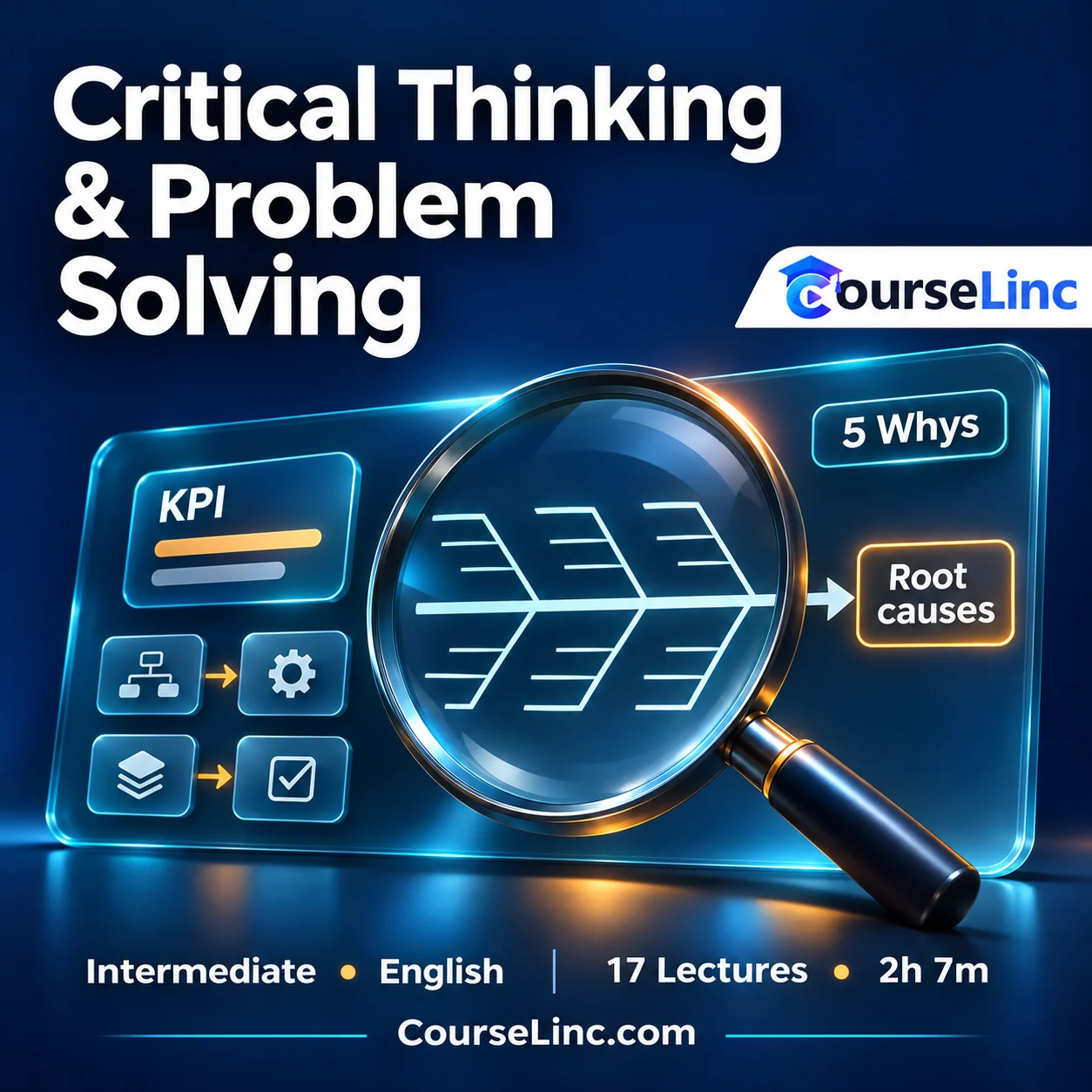
Use 5 Whys to explore root causes and systemic bottlenecks. Study Ishikawa, or fishbone, mapping to organize possible causes across multiple departments.
Structure information with MECE
Apply MECE: Mutually Exclusive, Collectively Exhaustive. Organize data without overlapping categories and use the structure to examine the information relevant to a business problem.
Prioritize by impact and effort
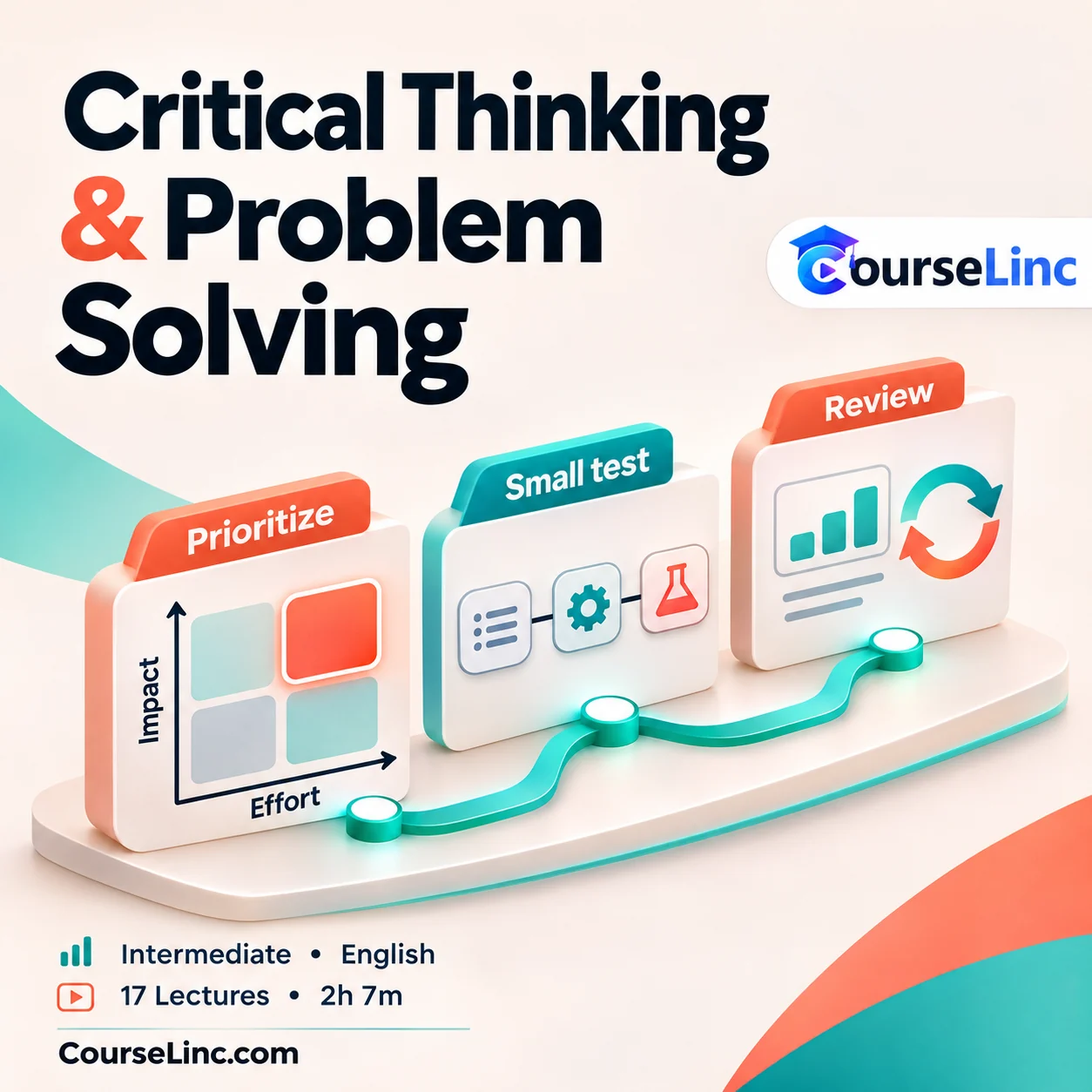
Use the Impact vs. Effort matrix to examine strategic priorities and resource decisions. Compare proposed responses through the work they involve and the impact being considered.
Test assumptions with lightweight solutions
Explore Minimum Viable Solutions (MVS) as lightweight assumption tests. Study controlled beta workflows in low-risk operational zones, using telemetry and iteration to learn from the response.
Examine consequences and business value
Consider second-order consequences across departments and their relationship to business continuity. Build quantitative business cases and use evidence to examine the proposed return on investment.
Explore the course details
From problem statements to structured analysis
Critical Thinking starts with quantitative problem definition and the choice of meaningful KPIs or metrics. The source of a problem is then examined through 5 Whys, systemic bottlenecks and multi-department fishbone mapping.
MECE structures the data, while the Impact vs. Effort matrix supports prioritization and discussion of resources. The methods work together to make the reasoning behind a proposed response more explicit.
Testing, consequences and quantitative business cases
Critical Thinking continues through Minimum Viable Solutions, lightweight assumption tests and controlled beta workflows in low-risk operational zones. Telemetry and iteration provide a way to examine results as the response is refined.
Evaluate second-order effects across departments and consider business continuity alongside the immediate problem. Quantitative business cases and evidence support the examination of ROI and the decision about a proposed response.
Starting point, audience and course format
Basic familiarity with enterprise team environments, departmental workflows or project coordination is required. No specialized software or advanced statistics is needed; a standard spreadsheet is sufficient.
Critical Thinking is relevant to operations managers, product leaders and PMs, management consultants, business analysts, team leads and department heads. Course level: Intermediate.
- Duration and structure
- 2 hours 7 minutes / 17 lectures
- Language
- English
- Video
- MP4 / H.264, 1920 x 1080
- Audio
- AAC, 44.1 kHz, 2 channels
This course uses artificial intelligence.
Explore related Business courses or Personal Development courses. For general background, see the ASQ fishbone overview.