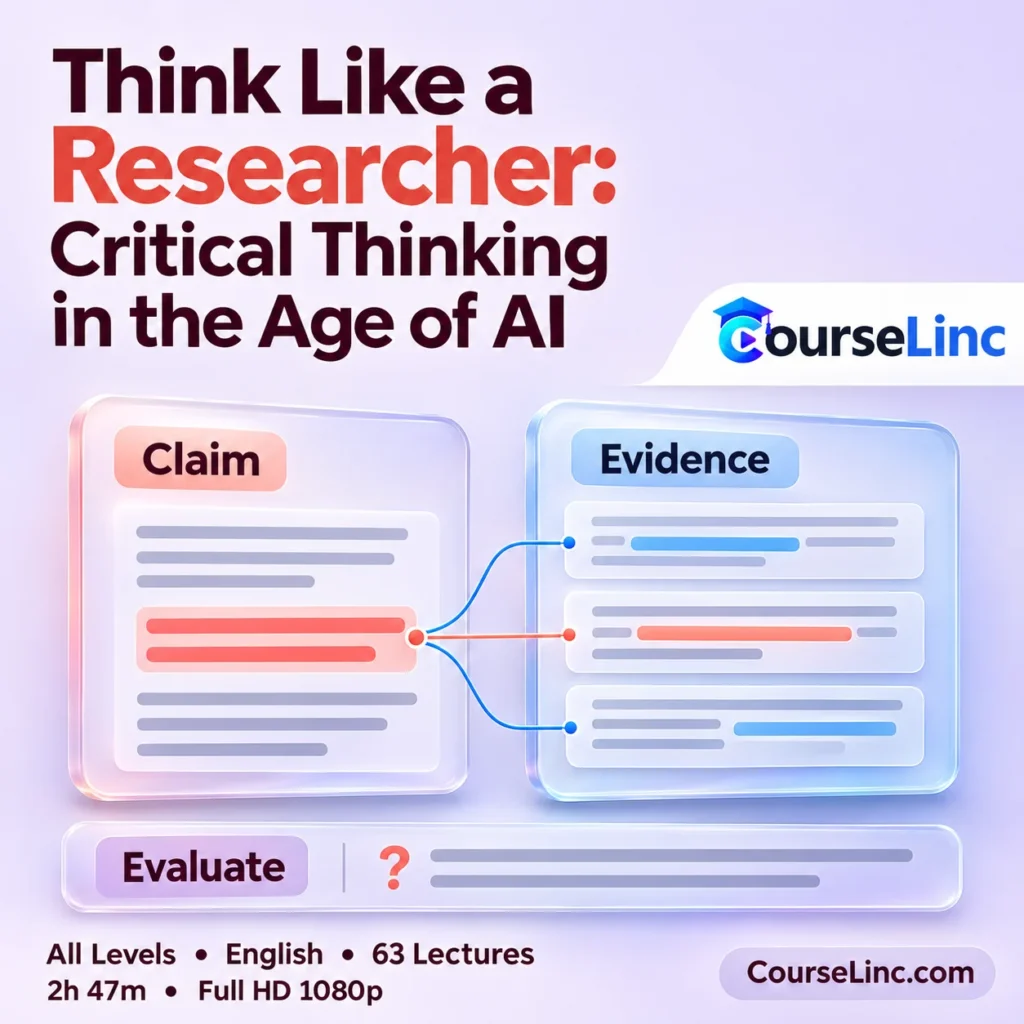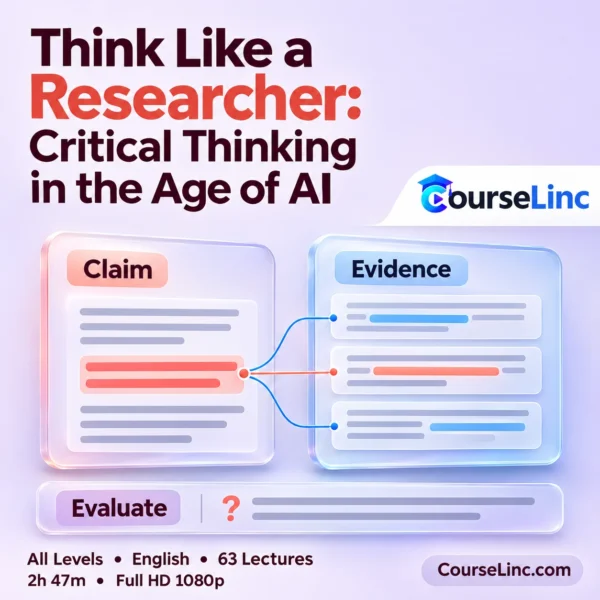
Think Like a Researcher: Critical Thinking in the Age of AI
Think Like a Researcher explores evidence appraisal, hidden assumptions, better questions, competing explanations, critical AI use and evidence-based recommendations for professional decisions.
63 lectures • 2h 47m • All Levels • English • Full HD
Course Overview
Think Like a Researcher: Critical Thinking in the Age of AI
Ask better questions. Examine what the evidence supports.
Think Like a Researcher applies research habits to professional decision-making, problem solving and critical AI use. Explore how to evaluate information, uncover assumptions and develop stronger arguments when the available evidence is incomplete or uncertain.
The course examines claims, statistics, explanations and recommendations in a practical professional context. It also shows how AI can become an intellectual sparring partner for questioning both an answer and the reasoning you bring to it.
Think Like a Researcher: 6 connected reasoning skills
Follow the reasoning from a question and its assumptions through the evidence, alternative explanations and the recommendation being considered.
Turn a vague problem into better questions
Examine the assumptions hidden inside a problem statement. Practice asking questions that give professional decision-making and problem-solving work a clearer focus for the evidence being considered.
Separate claims, evidence and conclusions
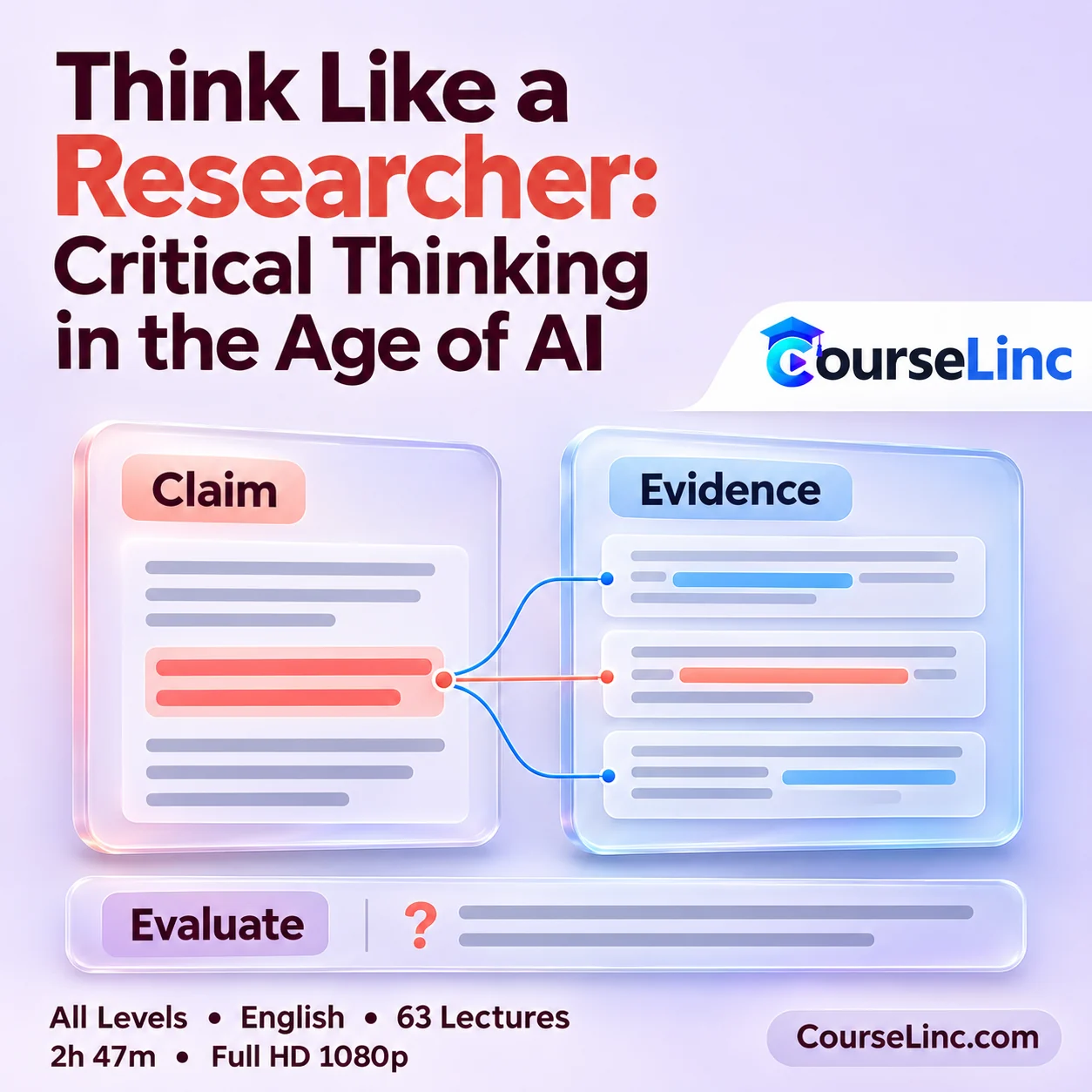
Distinguish what is claimed, what evidence supports it and what conclusion follows. Evaluate the relevance, quality and limits of the information before relying on an argument.
Question statistics, causality and reasoning
Examine misleading statistics, weak causal claims and reasoning biases. Consider how these issues can affect the interpretation of reports, research and advice used in a professional decision.
Generate and test competing explanations
Develop alternative explanations and test them against the information available. Review an initial intuition alongside competing possibilities to examine what the evidence supports and what remains uncertain.
Challenge AI answers and your own reasoning
Question confident AI answers for hidden assumptions, weak reasoning, uncertainty and unsupported conclusions. Use AI as an intellectual sparring partner to test your own reasoning as well.
Build evidence-based recommendations
Develop stronger evidence-based arguments and recommendations. Apply the Think Like a Researcher approach to decisions that must be made with incomplete information and uncertainty, using the practical frameworks discussed in the course.
Explore the course details
Professional application and evidence appraisal
Think Like a Researcher uses practical research-based frameworks for business and professional decisions. Research habits are applied to evaluating claims, uncovering assumptions, asking better questions and judging the evidence behind a proposed conclusion.
These reasoning habits apply to reports, statistics, expert disagreement and apparently contradictory research. The emphasis is on the relevance, quality and limits of evidence when assessing an argument, comparing explanations or deciding what to recommend under uncertainty.
Starting point and who it is for
No academic or research background is required. No advanced AI knowledge is required. Bring curiosity and a willingness to question assumptions, evidence and conclusions. The course takes a practical, accessible approach.
Think Like a Researcher is relevant to:
- Managers and business leaders making professional decisions.
- Consultants, strategists and entrepreneurs solving problems and developing recommendations.
- Professionals and knowledge workers using AI, reports, data or expert advice.
- Researchers, graduate students and academics transferring research rigor outside academia.
Course format
- Duration and structure
- 2 hours 47 minutes / 63 lectures
- Language and level
- English / All Levels
- Video
- MP4 / H.264, 1920 x 1080
- Audio
- AAC, 44.1 kHz, 2 channels
Explore related Business courses or Personal Development courses. For optional source-evaluation background, see the Cornell Library guidance.