Master 2D Character Animation in Adobe Animate-Advance Level
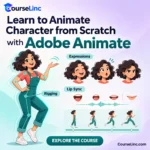
Develop 2D Character Animation in Adobe Animate with rigging, lip sync, expressive gestures, walk and run cycles, attitude-based motion and animal animation. Includes step-by-step demonstrations, practice files and assignments; basic software knowledge is required.
Course Overview
2D Character Animation
Turn character movement into an expressive performance.
Develop your 2D Character Animation skills in Adobe Animate through rigging, expressive acting, walk and run cycles, and animal movement. Step-by-step demonstrations connect character construction with motion, while practice files and assignments support your own work.
2D Character Animation: 6 skill areas
Build on familiar tools and focus on the choices that give motion its rhythm, attitude and expression.
Views & character rigging
Prepare front and three-quarter rigs using layers and symbols, and explore bone tool rigging for character movement.
Face, voice & gestures
Animate eye blinks, audio-based lip sync, facial expressions, hand gestures and head turns to support a character’s performance.
Walk cycles
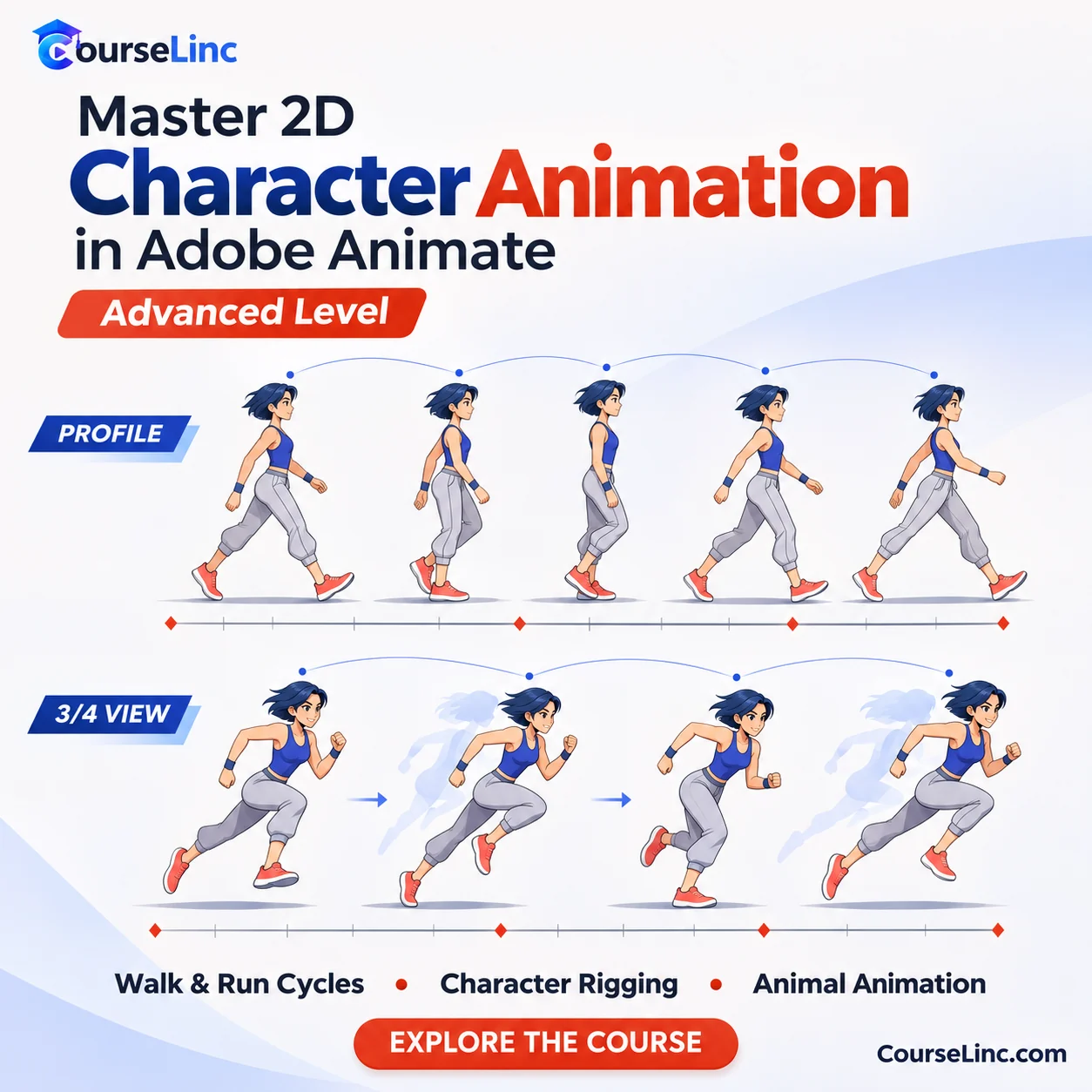
Develop profile and three-quarter walk cycles, using timing and spacing to shape the character’s movement from pose to pose.
Run cycles
Build profile and three-quarter run cycles and practice the timing and spacing that distinguish running from walking.
Attitude in motion
Explore happy, sad, angry, sneaky, dreamy, smug and scared movement, connecting the character’s attitude with its animated action.
Animal animation
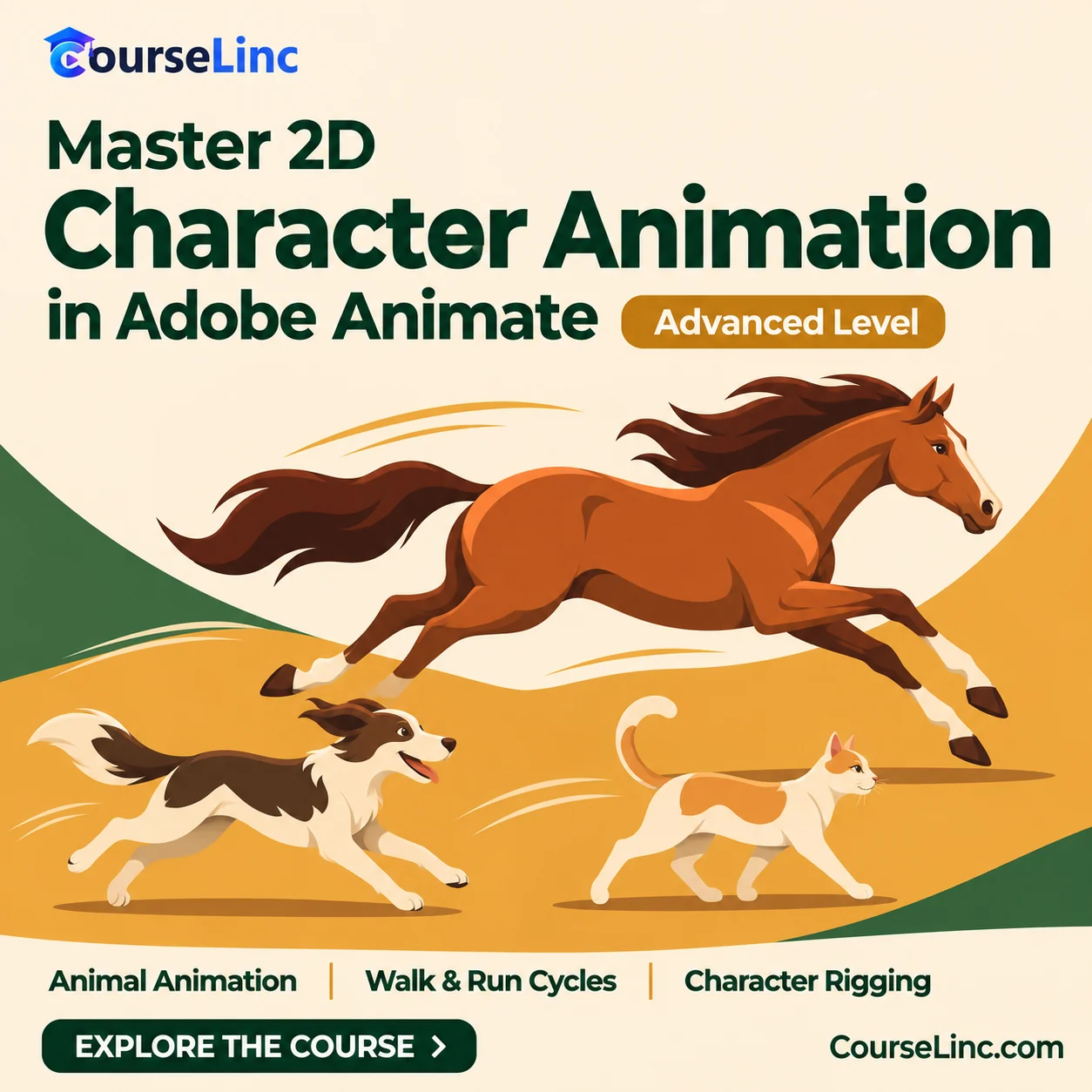
Study animal locomotion through walks, trots, gallops and runs, extending your practice beyond human character movement.
From construction to character
Make the movement match the mood
Use 2D Character Animation practice to connect a rig, facial expression, gesture and movement cycle. Explore how timing, spacing and attitude work together in a character’s performance.
Explore the course details
What you should know before starting
- Basic experience with 2D animation in Adobe Animate.
- Familiarity with the timeline, layers and basic drawing.
- A willingness to practice consistently.
Movement cycles & animal coverage
Character cycles cover walking and running in profile and three-quarter views, with attention to timing and spacing.
Animal examples include horses, dogs, cats, camels, bears, kangaroos and mice. Explore walks, trots, gallops and runs across the animal-animation lessons.
Practice & who this course is for
Follow step-by-step demonstrations, then work with the included practice files and assignments to apply the techniques.
For animators who know the basics, students, freelancers, motion designers, game developers, YouTubers, comic and storyboard artists, educators and hobbyists seeking more character-animation practice.